

Every student deserves to attend school without worrying about being bullied, discriminated against, physically harmed, or emotionally mistreated. Schools should be places where children feel accepted, respected, protected, and encouraged to reach their full potential. However, for many Black students, the educational experience can involve challenges that extend far beyond classroom assignments and academic performance.
Bullying, racism, unequal disciplinary practices, and inadequate mental health support can create serious barriers to learning. When these problems are ignored or improperly addressed, students may begin experiencing anxiety, depression, declining academic performance, social isolation, and a loss of confidence. Students with emotional, behavioral, or developmental disabilities may face additional difficulties when schools misunderstand their needs or respond to their behavior primarily through punishment.
A November 2026 report about New York City public schools brought renewed attention to these concerns. According to an analysis by the city’s Independent Budget Office, nearly 30% of students classified with emotional disabilities were placed in separate special education schools. The reporting also highlighted the Path program, which uses additional classroom support and trauma-informed strategies to help students remain connected to general education environments.
These findings raise an important question: Are schools doing enough to understand students’ individual needs before resorting to exclusion, suspension, or restrictive educational placements?
For Black students and their families, this conversation is especially important. A safe educational environment requires more than simply preventing physical violence. It requires addressing racism, recognizing emotional distress, responding to bullying, and ensuring that every student receives appropriate educational support.
At The Black Student Advocate, the focus is on helping Black families and school employees address educational challenges, understand student rights, and advocate for fair treatment within K-12 school systems.
1. Understanding How Bullying and Racism Affect Black Students
Bullying and racism are two issues that can significantly influence a student’s educational experience. Although they sometimes occur separately, they can also overlap, creating an environment where students feel targeted because of their race, appearance, background, behavior, or disability.
Bullying may include repeated name-calling, intimidation, social exclusion, threats, physical aggression, or online harassment. When these actions involve racial stereotypes, discriminatory comments, or attacks related to a student’s identity, the situation becomes even more concerning.
For example, a Black student may experience racial jokes from classmates, receive negative comments about their hair or skin color, or be repeatedly treated as a troublemaker because of stereotypes. Another student may be excluded from group activities or disciplined more harshly than classmates for similar behavior.
These experiences can make students question whether they truly belong in their school community.
Recognizing the Signs of School Bullying
Parents and guardians should pay attention to changes in a child’s behavior, particularly when those changes appear suddenly or become persistent.
Possible warning signs include:
Avoiding school or frequently asking to stay home.
Becoming unusually quiet, withdrawn, or irritable.
Losing interest in academic activities.
Experiencing unexplained sadness or anxiety.
Having difficulty sleeping or concentrating.
Reporting conflicts with classmates or teachers.
Showing unexplained injuries or damaged belongings.
Becoming uncomfortable discussing school experiences.
Not every behavioral change indicates bullying, but repeated concerns deserve attention.
Why Schools Must Take Racism Seriously
Racial discrimination can affect more than a student’s emotional well-being. It can influence classroom participation, relationships with teachers, disciplinary decisions, access to educational opportunities, and overall academic development.
Title VI of the Civil Rights Act of 1964 prohibits discrimination based on race, color, or national origin in federally funded education programs. The U.S. Department of Education also explains that schools have responsibilities to respond appropriately to racial harassment that creates a hostile educational environment.
Schools should establish clear reporting procedures, investigate complaints, document incidents, and take appropriate action to prevent repeated misconduct.
A student should never have to accept racial harassment as a normal part of growing up.
2. Physical Injury and the Importance of Creating Safer Schools
Physical safety is one of the most fundamental responsibilities of an educational institution. Students cannot fully concentrate on learning when they are afraid of being attacked, threatened, or physically injured.
Physical aggression in schools can take many forms, including hitting, pushing, kicking, fighting, threats of violence, and other harmful conduct. Sometimes, physical incidents develop from ongoing bullying or unresolved conflicts between students.
In other situations, students with emotional or behavioral challenges may experience escalating situations when appropriate support and intervention are unavailable.
Regardless of the circumstances, schools must take reasonable steps to protect students and respond to safety concerns.
What Should Parents Do When a Student Experiences Physical Injury?
When a child reports being physically harmed at school, parents should take the concern seriously and act promptly.
Consider the following steps:
1. Address Immediate Safety and Medical Needs
If a student has been injured, seek appropriate medical attention. If there is an immediate threat of serious harm, contact emergency services when necessary.
2. Document the Incident
Record the date, location, people involved, description of what happened, and any available witness information. Keep photographs of visible injuries and copies of relevant communications when appropriate.
3. Notify School Administration
Report the incident to the teacher, principal, or designated school administrator. Whenever possible, communicate in writing so there is a clear record of the concern.
4. Request Information About the School’s Response
Ask what steps the school is taking to investigate the incident, protect the student, and prevent similar situations from happening again.
5. Monitor the Student’s Emotional Well-Being
Physical injuries may heal, but the emotional effects of a frightening school experience can continue. Parents should watch for anxiety, fear, sleep difficulties, or reluctance to return to school.
Schools should not treat physical injuries as isolated disciplinary matters without considering the broader circumstances that contributed to the incident.
A comprehensive response should prioritize student safety, accountability, and prevention.
3. Mental Health Challenges Require Understanding, Not Just Punishment
Mental health is closely connected to a student’s ability to learn, communicate, develop relationships, and participate in classroom activities.
Students experiencing anxiety, depression, trauma, emotional distress, or behavioral difficulties may struggle to express their feelings in ways that adults immediately understand.
For example, a child who repeatedly leaves the classroom may be experiencing anxiety, sensory overload, difficulty regulating emotions, or another unmet need. A student who becomes frustrated during lessons may need additional support rather than immediate punishment.
This does not mean that schools should ignore harmful behavior or compromise the safety of other students. Instead, they should identify the reasons behind behavioral challenges and respond with appropriate interventions.
The Importance of Trauma-Informed Education
Trauma-informed educational practices encourage teachers and school administrators to understand how stressful experiences can influence student behavior.
Rather than automatically interpreting challenging behavior as intentional misconduct, educators can consider whether the student needs additional emotional, behavioral, or instructional support.
Helpful strategies may include:
Access to school counselors and social workers.
Predictable classroom routines.
Positive behavioral interventions.
Quiet spaces where students can regulate their emotions.
Individualized support strategies.
Regular communication between families and educators.
Appropriate occupational therapy or other related services when needed.
The Path program discussed in the November 2026 NYC reporting provides an example of this approach. Its classrooms combine general education participation with additional teaching staff and therapeutic support for students with emotional and behavioral difficulties.
The larger lesson is that students benefit when schools invest in resources that help them succeed rather than relying exclusively on exclusionary discipline.
How Mental Health Challenges Can Affect Academic Performance
Unaddressed emotional difficulties can interfere with concentration, memory, classroom participation, attendance, and relationships.
Students may begin falling behind academically because much of their attention is focused on managing stress or avoiding uncomfortable situations.
For Black students who also experience racism or bullying, these pressures can become even more difficult to navigate.
Parents should feel comfortable asking schools about available counseling services, evaluations, accommodations, and other appropriate supports.
Mental health concerns should never be dismissed simply because a student appears disruptive, withdrawn, or difficult to manage.
4. Why Inclusive Education Matters for Students With Disabilities
Inclusive education means providing students with disabilities meaningful opportunities to learn alongside their peers whenever appropriate, while ensuring that they receive the services and accommodations they need.
The Individuals with Disabilities Education Act (IDEA) includes the Least Restrictive Environment (LRE) requirement. Under this provision, students with disabilities must be educated alongside students without disabilities to the maximum extent appropriate. Separate classes or schools should be considered when education in regular classrooms cannot be achieved satisfactorily with supplementary aids and services.
This principle is important because a student’s disability should not automatically determine that they must be separated from the broader school community.
The Problem With Unnecessary Exclusion
When schools rely too heavily on suspensions, removals, or restrictive placements, students may lose valuable instructional time and opportunities to build relationships with classmates.
For students who already experience discrimination or social isolation, exclusion can deepen feelings of rejection.
The NYC Independent Budget Office analysis discussed in the November 2026 reporting also highlighted significant disparities. Black students represented 44.6% of students classified with emotional disabilities, compared with approximately 27.5% of all students with disabilities in the city.
These figures do not establish that every individual placement is discriminatory. However, they reinforce the importance of examining how students are evaluated, classified, disciplined, and assigned to educational settings.
What Effective Inclusive Education Should Include
A supportive school environment should consider each student’s individual educational needs.
Important elements include:
Proper disability evaluations.
Individualized Education Programs (IEPs), when appropriate.
Section 504 accommodations for eligible students.
Access to qualified special education professionals.
Positive behavioral support.
Opportunities to participate in general education.
Collaboration between teachers, parents, and support professionals.
Regular reviews of student progress and educational placement.
Families should understand that an IEP or 504 Plan is not simply paperwork. It is an important part of ensuring that eligible students receive the services and accommodations necessary to access their education.
5. How Parents Can Advocate for Their Children’s Educational Rights
Parents and guardians are often the first people to recognize when something is wrong in their child’s educational environment.
However, communicating concerns to a school district can sometimes be difficult, especially when families feel their experiences are being dismissed or their children are being treated unfairly.
Effective advocacy starts with understanding the situation, maintaining documentation, and asking specific questions.
Practical Steps for Parents
Keep Written Records
Maintain copies of emails, disciplinary notices, meeting summaries, attendance information, injury reports, and other relevant school communications.
Request School Meetings
If bullying, racism, physical injury, or mental health concerns continue, request a meeting with the appropriate school representatives.
Understand IEP and 504 Rights
If a student has a disability or may need an evaluation, parents can ask the school about the process for determining eligibility and appropriate educational support.
Ask for Clear Intervention Plans
Parents should understand what the school intends to do to address the problem, support the student, and prevent similar incidents.
Follow Up in Writing
After important meetings, send a brief written summary of what was discussed and any agreed-upon next steps.
Seek Advocacy Support When Necessary
When communication breaks down or a school district fails to address serious concerns, families may benefit from assistance from an experienced education advocate or qualified legal professional.
The goal is to ensure that the student’s educational needs, safety, and rights remain central to every discussion.
6. How The Black Student Advocate Helps Families Address School Challenges
When families encounter bullying, racism, unequal treatment, or concerns involving special education, they may not know where to begin.
Understanding school procedures, communicating with administrators, preparing for meetings, and navigating disciplinary matters can become overwhelming.
The Black Student Advocate works to empower Black families and school employees by helping them address educational challenges and seek fair treatment within K-12 school districts.
Its advocacy initiatives include reducing bullying, educating parents about student rights, and increasing parent involvement.
Advocacy Services That Support Families
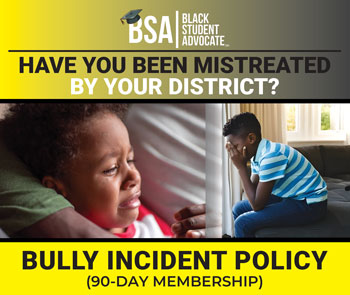
Bullying Incident Advocacy
Families dealing with bullying concerns can explore advocacy support and the Bully Incident Policy Package. Having a structured approach to documenting incidents and communicating with school officials can help parents address concerns more effectively.
IEP and 504 Meeting Support
Parents navigating special education meetings may need assistance understanding the issues being discussed, identifying questions to ask, and advocating for appropriate educational support.
School Incident and Expulsion Advocacy
When a student faces serious disciplinary action or an expulsion matter, families may need help understanding school procedures and communicating their concerns.
Parent Consultations
A consultation can provide an opportunity for families to explain their situation, identify possible next steps, and better understand how to approach their school district.
Support for Black School Employees
The organization also supports Black school employees who encounter workplace challenges within K-12 educational environments.
These services reflect an important principle: families deserve to be heard, students deserve fair treatment, and schools should be accountable for providing safe and supportive educational environments.
Families can explore available services through The Black Student Advocate’s website at https://theblackstudentadvocatenetwork.com/.
Conclusion
Every child deserves an educational environment where they can learn without fear of bullying, racism, physical injury, or emotional harm. For Black students, achieving that environment also means confronting unequal treatment, recognizing individual needs, and ensuring that disability-related challenges are not automatically met with exclusion or punishment.
The conversation surrounding students with emotional disabilities in New York City demonstrates why schools need more comprehensive approaches to student support. Inclusive classrooms, trained educators, mental health resources, meaningful family involvement, and fair disciplinary practices can make a significant difference in students’ educational experiences.
Parents should not have to struggle alone when their children experience discrimination, bullying, or inadequate educational support. By understanding student rights, documenting concerns, and seeking appropriate advocacy assistance, families can take meaningful steps toward protecting their children’s educational opportunities.
The Black Student Advocate remains committed to empowering Black families and school employees, promoting student rights, reducing bullying, and encouraging fair treatment throughout K-12 education.

Share This Page